Website feedback in GitHub
Keep shared website feedback and its discussion together in GitHub issues.
One issue per feedback thread
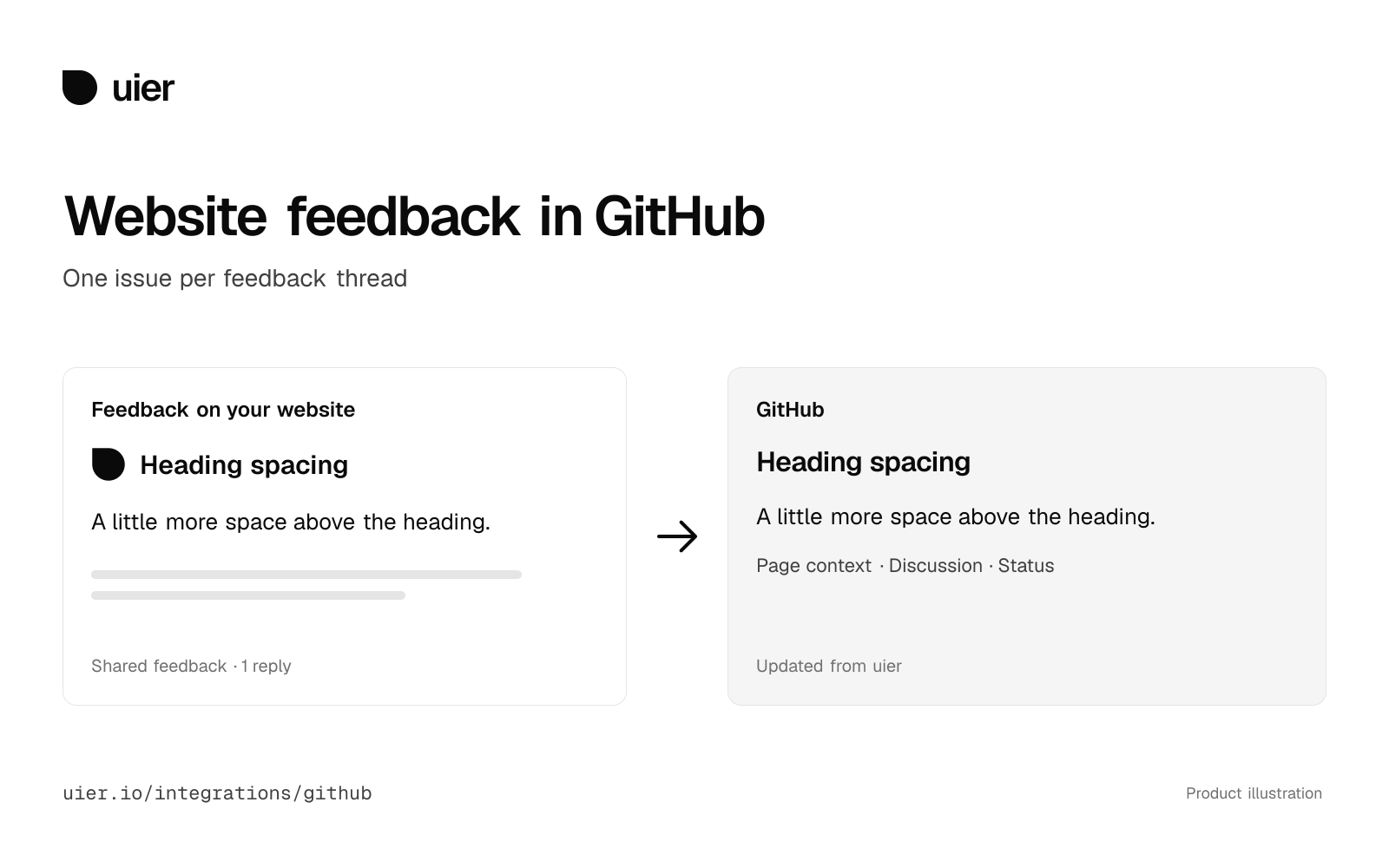
uier creates an issue for each shared feedback thread in your chosen repository. It updates the issue, mirrors the discussion and closes or reopens it as the uier status changes.
What it does
Optional features stay off until an admin turns them on for the project.
An issue for each thread
Each shared feedback thread becomes an issue in the repository you choose, with its text, page context and a link back to uier.
Discussion
Replies in uier are added as issue comments and kept current. Comments people write in GitHub are kept.
Open and closed
Marking feedback Done closes the issue, and reopening it in uier reopens the issue.
Screenshot links
Screenshots stay in uier behind protected links. They are not uploaded to GitHub.
Two-way status sync
OptionalClosing or reopening the issue in GitHub marks the feedback Done or Open in uier.
Reply sync
OptionalNew issue comments come back to the uier thread. Edit or delete the original to update its copies.
Backfill
Add up to 1,000 existing shared threads when you are ready. Nothing older is copied until you ask.
What you can configure
A workspace admin chooses these on the project’s GitHub page, in Settings, then Integrations.
- RepositoryRequired
- A repository the GitHub App can reach and you administer. A public repository needs an explicit confirmation.
- Two-way status sync
- Off by default. Status changes made in the connected tool are checked in the background, usually every five minutes. Pending uier changes take precedence.
- Reply sync
- Off by default. Starts with replies added after you turn it on. Imported replies show their source and are read-only in uier.
- Sync on or off
- Pause delivery without disconnecting. Existing issues stay.
Backfill and Disconnect are on the same page. Disconnect keeps the copies already made.
Get connected
Start in the project you want to connect.
- Sign in to uier, open or create a project and add its toolbar to your website.
- As a uier workspace admin, open the project’s Settings, then Integrations, and choose Connect on GitHub.
- Install uier for GitHub on selected repositories, then authorize your GitHub account. You need administration rights for the repository you choose.
- Load repositories, choose one and save. Public repositories require an explicit confirmation. Use Backfill GitHub feedback to include up to 1,000 existing shared threads.
Access and data
Each project chooses its own destination.
Permissions
Issues read and write, and repository metadata read. Customers choose which repositories the app can access. uier does not request source code, pull requests or Actions access.
What to expect
Changes sync in the background. Comments people write in GitHub stay with GitHub unless reply sync is on. Attachments and reactions are not synced.
Privacy and disconnect
Private feedback and the public uier showcase are excluded.
Making a thread private or deleting it queues cleanup of reachable managed issues and comments. GitHub history and notifications can remain. Disconnect keeps existing copies; uninstall the app in GitHub to revoke its wider access.
Read the privacy policy and terms of service.
Help and pricing
Every feature available today is free and will stay free forever. If we introduce pricing, it will apply only to new features users want.
For setup, account or sync problems, email contact@signalco.io. Include the provider and what happened. Keep credentials and private feedback out of your message.
You can also report a product issue, suggest an integration or read about security.